
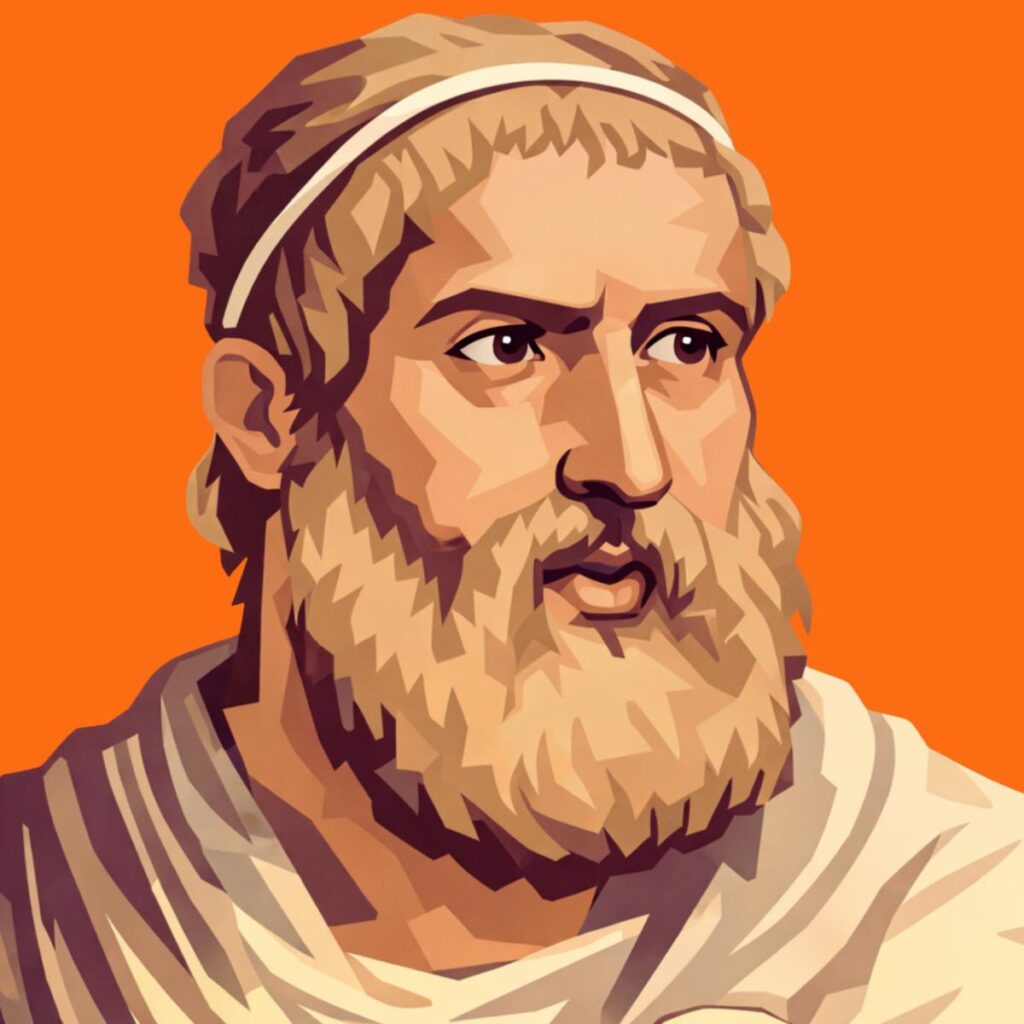
In the streets of ancient Athens, where the voices of citizens blended with the sounds of markets, temples, and theaters, a man was born who would offer humanity stories stronger than time itself. Sophocles was born around 496 BC, at a time when the city was transforming into a global center of thought.
His family was wealthy and ensured he received an excellent education in music, poetry, and philosophy. It is said that after the great victory at the Battle of Salamis, young Sophocles was chosen to lead the chorus of boys singing in celebration of Athens’ triumph. It was a symbolic moment, as though the city had already recognized a voice that would accompany it forever.
For Sophocles, theater was not merely entertainment, but a public dialogue about humanity and destiny. In the city’s dramatic competitions, he eventually faced the great Aeschylus. Sophocles’ victory marked the beginning of a new era, where characters on stage became more human, vivid, and real.
Sophocles introduced revolutionary innovations to tragedy: he added the third actor to the stage and introduced scene painting. He did not portray flawless heroes, but living people struggling against fear, power, and their own inner selves.
From his pen emerged figures who would remain immortal, challenging the human mind for millennia. His heroes were never distant from humanity; they were humanity itself, with all its contradictions.
Antigone, Oedipus, and Electra: figures who explored the eternal question of fate. Can a person escape what has been destined, or do their very efforts lead them exactly where they fear to go?
In particular, Oedipus Rex is considered one of the most important works of all time. Through it, Sophocles explored the limits of human freedom, turning the stage into a mirror of the soul facing the inevitable.
Alongside his art, he served Athens as a general alongside Pericles, firmly believing that a citizen must contribute to public life. Despite his immense fame, he remained a calm and wise man, writing over a hundred tragedies until his death around 406 BC.
When he passed away, Athens lost a voice that dared to speak about what people most feared to face. Today, his works continue to travel far beyond the borders of Greece, illuminating the world stage like a flame that time itself cannot extinguish.
Sophocles’ story teaches us that true greatness lies in the courage to seek the truth and to stand upright, with dignity, before one's own fate.